

The majority of women will have one or more ovarian cysts during their lives. The global health statistics indicate that about 7 percent of women across the world have an ovarian cyst, and the rates are even higher in certain age groups. The incidence of ovarian cysts in postmenopausal women in the US is 18 percent in a 15-year period.
But due to the internet myths, women tend to panic and mix normal painless cysts with life-threatening medical emergencies. It is also a misconception that all ovarian cysts are painful and that a cyst is cancer. The majority of ovarian cysts are harmless and resolve on their own.
However, there are some that are painful and need medical intervention. It is important to identify the actual ovarian cyst symptoms and know what the actual ovarian cysts are.
It allows you to avoid unneeded stress and makes sure that you are aware of when to get immediate medical assistance.
What Is an Ovarian Cyst?
You must be aware of what a cyst is before you examine the symptoms. Ovarian cysts are fluid-filled sacs that develop on or within an ovary. They are a natural by-product of your menstrual cycle.
Each month, your ovary develops a tiny sac known as a follicle, which contains an egg. The sac normally breaks up when the egg is released. When the sac is not dissolved, it turns into a
functional ovarian cyst. These are absolutely natural, seldom lead to long-term complications, and generally resolve within 1 to 3 menstrual cycles.
Ovarian cysts are of different types. Follicle cysts develop as a result of a follicle failing to rupture at ovulation.
Corpus luteum cysts are formed after ovulation, when the empty follicle is filled with fluid. These are the most frequent ones and are nearly invariably benign.
Others are dermoid cysts, containing tissue such as hair or fat, and endometrioma cysts filled with endometrial tissue. These tend to induce symptoms and may even need treatment.
Are Ovarian Cysts painful?
It all depends on the size and type of your cyst. The majority of functional cysts are tiny (less than 2 centimeters) and do not produce any pain whatsoever. You will never suspect that they are there.
But when the cyst becomes larger, typically 4 or 5 centimeters, then it may begin to produce some observable discomfort.
You can experience pain as:
- Pain in the lower part of your stomach or lower back.
- A sense of weightiness or fullness in your pelvis.
- Suddenly, sharp pain on one side of your pelvis in case the cyst bursts, ruptures, or the ovary becomes twisted, a condition known as ovarian torsion.
Thus, when you suddenly have severe, sharp pain in the pelvis, immediate medical attention is needed since a ruptured cyst or torsion needs emergency treatment.
Top Ovarian Cyst Symptoms
If your cyst is large but has not ruptured, the signs of ovarian cysts can be very subtle. These symptoms tend to resemble other ordinary complications, such as irritable bowel syndrome or premenstrual syndrome (PMS). The most frequent clinical manifestations are:
1. Lower Abdominal Pain or Pressure
Pain or pressure in the lower abdomen on the side of the cyst is the most common symptom of ovarian cysts. This pain is usually dull, aching, or cramping, but not sharp. It can be intermittent, usually associated with the menstrual period.
The pain can last a few days or continue for weeks. You can manage it with over-the-counter medications and heat.
2. Pelvic Pain
In some women, the pelvic pain is more widespread than lower abdominal. This is generally referred to as a dull pain in the pelvic area.
3. Pain During Menstruation
Dysmenorrhea refers to a painful period, and it is a reported symptom of ovarian cysts. This pain can be more intense than normal, or it can be of a different nature from the normal period pain that the woman experiences.
4. Sex Pain (During or After Sexual Intercourse)
Dyspareunia is pain during or after sex. It is a known symptom of ovarian cysts.
The cyst is located directly next to the vagina and uterus, so the deep penetration may physically press into the ovary and the cyst, resulting in sharp or painful sensations. You must always inform your doctor in case this happens.
5. Abdominal Fullness and Bloating
Feeling bloated during the week before your period is normal. But one significant red flag of ovarian cancer is persistent bloating that fails to resolve.
Some women complain of fullness, heaviness, or bloating in the abdomen on the side of the cyst. This occurs when a larger cyst takes up space in your pelvic area.
6. Bowel and Bladder Function Change
Your bowels and bladder are just above and below your ovaries. Cysts can cause pressure on the bladder, resulting in urinary frequency or urgency. This may lead to constipation, diarrhea, or overall digestive distress.
7. Irregular Vaginal Bleeding
Some types of cysts, including endometriomas and corpus luteum cysts, may cause abnormal vaginal bleeding, including heavier or lighter periods or bleeding between periods.
8. Breast Tenderness
Some women may experience breast tenderness or heightened sensitivity of the breast. This is a less common symptom of ovarian cyst.
9. Nausea and Vomiting
Nausea and vomiting may be experienced in more severe cases, such as cyst rupture or cyst torsion. This happens because larger cysts cause pressure on your abdominal organs.
10. Unexplained Weight Loss
It may appear as a fantasy to lose weight without any effort, but in the healthcare sector, it is a big alarm.
When your weight is decreasing too quickly without any alterations to your nutrition or exercise program, then it implies that your body is using up all its energy to feed a disease process.
11. Severe Fatigue
It is not normal to be too tired to get out of bed even after getting 8 hours of sleep.
Ovarian cancer makes your body react to it in a systemic inflammatory manner. This may result in the profound, heavy fatigue not being relieved by any rest.
12. Ovarian Cancer Symptoms
The greatest fear of women is that a cyst is cancerous. There is a big difference between benign ovarian cysts and ovarian cancer.
Whereas benign cysts come and go as you pass through your cycle, ovarian cancer is a solid tumor that develops abnormally.
You need to know the difference between normal cysts and actual ovarian cancer symptoms. The symptoms of cancer are typically chronic and constant problems that are not related to your menstrual period.
When Do Ovarian Cyst Symptoms Become Serious?
It is necessary to immediately seek medical attention in the following cases:
Sudden Abdominal Pain: This kind of pain is acute, sharp, sudden, and located in the lower abdomen and is usually reported by the woman as the worst pain. These are gynecological emergencies. It may be caused by a ruptured cyst or ovarian torsion. Not all ruptured cysts result in acute pain, and some may produce slight pain. A hemorrhagic cyst is a cyst that has blood, and it is likely to cause severe pain and bleeding.
Ovarian Torsion: It happens when a cyst wraps around the ligaments of your ovary. This blocks blood flow to the ovary and fallopian tube, which poses a medical emergency. It may cause sudden and severe pain accompanied by nausea, vomiting, and in some cases, fever. This pain is so severe that you may not be able to walk. This may result in irreversible damage to the ovary unless it is addressed in time. In some extreme instances, it may cause ovary loss.
Fever and Infection: Fever with cyst symptoms can indicate infection or a more severe illness. You should seek immediate medical attention if you develop fever along with abdominal pain.
Ovarian Cysts Diagnosis
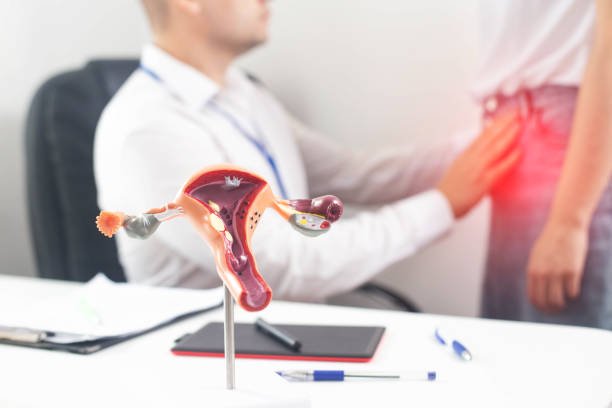
If you have symptoms of an ovarian cyst, your medical professional will examine you in a few different ways.
- Pelvic exam: Your provider uses physical examination to check your ovaries. Although the cysts are not always palpable, a palpable mass can be observed.
- Pelvic ultrasound: It is the most common imaging test used to diagnose ovarian cysts. Ultrasound is used to identify the size, type, and nature of a cyst. Simple cysts are fluid-filled sacs, but complicated cysts can have debris, septations, or internal echoes.
- Blood tests: Some of the markers such as CA-125 can be done in case of suspicion of more complex cyst or ovarian cancer. But a high CA-125 can be present in many disorders and is not cancer-specific.
- MRI or CT scan: It might be done when the ultrasound is not definitive or a complex cyst needs to be characterized.
- Laparoscopy: Sometimes, a minimally invasive surgery can be performed to directly look at the cyst and possibly treat it where necessary.
The majority of ovarian cysts do not need any follow-up imaging. ACOG states that simple cysts that are less than 5cm in diameter may be safely observed without repeat imaging in most instances.
Get Evaluated in Texas by Experts
Pelvic health is puzzling and you do not have to live with anxiety and pain. Ovarian cysts are so widespread and the majority of them do not have any symptoms and do not need any treatment.
But if you are having pelvic pressure that is persistent, painful periods, or experiencing any of the red flags mentioned above, you should get checked immediately.
There are many treatment options available to help, such as conservative management. hormonal birth control or surgical treatment for larger cysts or those causing complications.
Depending on your case scenario, your healthcare provider can assess which method will be suitable for you.
At Kairos Integrative Care in Texas, Lola, one of our integrative primary care nurse practitioners, is here to adequately assess your symptoms and recommend an individualized treatment plan.
We accept major insurance plans, including Blue Cross, Aetna, Ambetter, Cigna, and more. New patients are always welcome, and if coming into the clinic isn’t possible, telemedicine appointments are available across Texas.
If you are in Houston or anywhere across Texas and experiencing ovarian cyst symptoms or persistent pelvic pain, schedule a consultation with us today!