
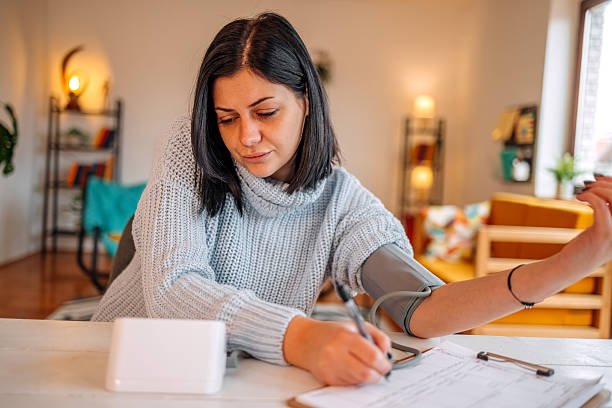
Almost everybody checks their blood pressure at some point. The majority of people do it incorrectly.
One out of every two adults in the United States suffers from high blood pressure. Millions of people in Texas are suffering from hypertension without realizing it. Millions of Texans are attempting to control this condition on a daily basis. But measuring blood pressure only once or twice a month at the doctor’s office is not enough. Blood pressure varies throughout the day.
This is why it’s important to know how to take blood pressure at home properly and reliably. A reading taken in the home provides your provider with information that just a visit to the office could not.
Why Home Blood Pressure Monitoring Matters
Blood pressure doesn’t stay the same. It rises during stress, workout, or after drinking caffeine. It goes down when you are resting or sleeping.
Many people suffer from something called “white coat syndrome. This increases their blood pressure just because they are anxious in a doctor’s office. This means that standard office readings are not accurate.
Your home blood pressure reading provides your doctor with a much more accurate picture of what your heart’s up to on a regular Tuesday afternoon.
The American Heart Association (AHA), and most major cardiovascular guidelines now advise home blood pressure monitoring for all people who have been diagnosed with or suspected to have hypertension. It is not meant to be a substitute for office readings. However, it is an important addition to them.
Selecting the Best At-Home Blood Pressure Monitor
If you use low-grade or faulty equipment, you won’t get an accurate reading. If you’re searching for the best blood pressure monitor to use at home, you have to look for one that has been clinically tested.
Upper Arm Monitor
This device is the gold standard. An automatic upper arm monitor that wraps around the bicep is the best option for nearly everyone. Make sure the cuff fits your arm properly. If it’s too small, it will show a false reading.
An upper arm blood pressure monitor measures the brachial artery, the same artery your provider uses at your office appointment. So, blood pressure readings at home can be directly compared to those taken in the clinic.
Wrist Monitors
A wrist blood pressure monitor is compact, easily portable, and travel-friendly. But your wrist must be at the same level as your heart for the wrist monitor to read accurately. If your wrist is too low or too high, the reading will be incorrect.
A wrist blood pressure monitor records BP at the radial artery close to your wrist. Studies have found that the blood pressure in the radial artery is higher in some people than in their brachial artery. This implies that even with perfect technique, wrist readings can still be confusing. Wrist monitors are not as reliable as other blood pressure monitors. These can be incorrect and are not recommended.
If you do use a wrist blood pressure monitor, right positioning is very important. You can place it directly over the radial artery, where you can feel your pulse. Do not put it on top of clothes.
How to take blood pressure at home step by step
The equipment is only as important as the technique. Poor technique on the same monitor will yield meaningless or potentially misleading readings.
Step 1. Prepare Properly
The 30 minutes before your reading make a huge difference in the outcome. Do this:
- Don’t smoke, drink caffeine, or exercise for at least 30 minutes before measurement
- Go to the toilet before taking blood pressure readings
- Do not have a large meal just before measuring
- Sit quietly for 5 minutes before the measurement begins
Step 2. Sit Correctly
How you sit while taking a reading affects the number you get. Unsupported position and poor posture can raise or lower your reading by 5 to 10 mmHg.
Sit in a sturdy chair, back tightly against the back of the chair. Place both feet flat on the floor; do not cross your legs. Sitting with legs crossed increases systolic blood pressure up to 8 mmHg. Place the arm on a flat surface (table or desk) so that the arm is at heart level. The elbow needs to be slightly bent and relaxed, not extended or tensed.
Relax for 5 minutes prior to starting. Do not talk and check your phone during the measurement.
Step 3. Set Cuff Properly
Tie the cuff around the upper arm, but not over clothes. The bottom end of the cuff needs to be roughly an inch above the bend of the elbow. The cuff should be tight but not too tight. You should be able to slip two fingers underneath it.
Most people measure their left arm. If your provider has said to measure a particular arm, do so consistently, especially if you know there is a difference between arms.
Step 4: Take the Reading
Click on Start and stay still and quiet while the cuff is inflating and deflating. The reading takes approximately 30 to 60 seconds. Write down both numbers when the reading is seen.
Step 5: Second Reading
Take two readings, one minute apart, each time you measure your blood pressure. Record the results or sync them to your app. The second reading is generally a little lower than the first and is more likely to be accurate.
What is the Best Time to Take Blood Pressure?
The timing matters a lot when it comes to blood pressure monitoring at home. Ideally, you should monitor blood pressure when you are at rest, not immediately after a stressful event.
There are two recommended times to take blood pressure:
- Morning: Take it first thing in the morning without eating anything, before you drink coffee, take any medications, or have breakfast.
- Evening: Take it again right before dinner or before you go to bed.
Try to use the same time for your readings each day. Avoid taking your BP immediately after smoking, exercising, or drinking caffeine.
Ambulatory Home Blood Pressure Monitoring
Your doctor may request ambulatory home blood pressure monitoring if they think that your blood pressure may be rising at unusual times of the day or if they want to be sure that you don’t have white coat syndrome in its entirety.
The ambulatory home blood pressure monitoring is not the same. It requires wearing a device that automatically records readings at predetermined times during the day and night, usually every 15 to 30 minutes. The cuff is placed on the arm, and the small machine attached to your belt automatically inflates and measures your blood pressure every 20 to 30 minutes, even when you are asleep. This data allows your doctor to easily review the 24-hour map of your cardiovascular health.
Common Mistakes That Lead to Inaccurate Readings
With the proper monitor and the right intentions, these errors still result in inaccurate readings of home blood pressure.
Using a cuff that does not fit. The most frequent and most significant mistake. The reading will be off if the cuff is too small or too large for the arm. Check the sizing guide that comes with your monitor.
Taking readings over clothing. Even the thinnest of fabric will affect the pressure traveling through the cuff, and will make it harder for it to be accurate.
Sitting incorrectly. Blood flow is impaired when sitting in a chair or crossing legs, which will produce an erroneously elevated reading.
Talking and texting: Any conversation or texting during cuff inflation will immediately raise your blood pressure. Stay completely silent and still.
Starting too quickly: Sitting and hitting the start button at once doesn’t allow the heart rate time to even out. A complete 5-minute rest is required.
Having a full bladder: Needing to pee can temporarily raise your blood pressure by 10 to 15 points. Always use the restroom before taking a reading.
Bottom Line
Normal blood pressure is approximately 120/80 mmHg. It’s a good start to know your numbers, and taking blood pressure at home puts you in control of that measurement.
However, understanding and adjusting medications based on that information requires a provider who is knowledgeable and understands your entire health history.
At Kairos Integrative Care, Lola, one of our integrative health providers, will review your at-home blood pressure logs, order advanced lab work to check your arteries and inflammation, and build a personalized plan to lower your blood pressure naturally.
Most insurance plans will cover blood pressure management visits, medication management, and ambulatory home blood pressure monitoring, if clinically indicated.