Iron deficiency in kids is a medical condition in which your child’s body does not have enough iron to make enough Hemoglobin. Inside the red blood cells, there is a special protein called hemoglobin, which carries oxygen to the brain, muscles, and organs.
When your child is iron-deficient, they get pediatric anemia, and the blood simply cannot carry the necessary oxygen to support normal cellular functions.
The WHO estimates that 40% of children between the ages of 6 and 59 months around the world are anemic. In the U.S., pediatricians see high ratios of toddlers and adolescent girls presenting with low iron levels.
It’s best if you realize that this is not a small dietary problem. Because low iron has an immediate effect on your child’s brain development, the immune system, and physical growth.
Why Do Kids Get Iron Deficiency?
Iron is more than just one mineral. It is also essential for the biological processes that are most important in childhood. The amount of iron that kids require is much higher than it is for an adult, and they have a very small margin of error.
Children are at significant risk for low iron because they have particular reasons, based on their biology and lifestyle. The risks are heavily dependent on their age.
1. Rapid Growth
The first two years of life are one of the fastest-growing years in the human life span. Children have times of rapid growth, particularly in infancy and childhood, and during adolescence.
Their bodies are rapidly gaining blood volume and muscle mass and require a tremendous amount of iron. The iron stores get depleted if they do not get a sufficient amount of iron through their diet.
2. Excessive Cow’s Milk Consumption
This is the most common cause of iron deficiency in toddlers. Parents are often not aware of the limited iron content in cow’s milk. Also, the calcium in milk competes with the iron in other foods to block the absorption of the iron from the food.
In young children, cow’s milk may irritate the lining of the digestive tract, leading to small amounts of bleeding over a long period of time, which causes low iron levels in their blood.
Excessive cow’s milk intake prevents toddlers from eating foods high in iron, which causes direct iron deficiency in cases of high intake, more than 16 to 24 ounces of cow’s milk per day.
3. Breast Milk Iron Is Limited After 6 Months
Iron is present in breast milk, although in limited quantities. This is covered by iron stores laid down during pregnancy (from the mother’s iron stores, which are passed to the fetus during the last four months of pregnancy).
Those stores that are produced during pregnancy are used up after 6 months, and iron intake from the diet becomes the primary source. The iron demand and supply gap is short-lived if complementary foods are not introduced or if they are not iron-rich, and if the formula being fed is not iron-fortified.
4. Picky Eating Phases
In most cases, young children are not eating the foods that contain the most iron in the diet, such as meats, beans, and leafy greens. A child who is on a “beige diet” (macaroni and crackers, and bread) will have an inadequate iron intake.
5. Menstruation in Teenagers
The risk of iron deficiency rises dramatically in girls starting menstruation. If a teenage girl has heavy periods and does not eat enough iron-rich foods to compensate for the blood loss, she will quickly become anemic.
6. Vegetarian or Vegan diet
Vegetarian and vegan diets can provide adequate nutrition for children. But there is a greater risk of iron deficiency. Plant-based (non-heme) iron is less absorbable than animal-based (heme) iron. If your child is a vegetarian, he may need a much higher amount of iron in his total daily diet.
With a well-planned plant-based diet, you can be sure your child won’t suffer from iron deficiency by carefully planning food combinations.
Symptoms of Iron Deficiency in Kids
Young children may not be able to tell you that they are tired or weak. You shouldn’t wait for your child to complain. It is best for you to proactively look for these physical and behavioral signs:
1. Irritability and mood changes
This is usually the initial symptom. The brain is not getting enough oxygen, and children can become very short-tempered, have trouble focusing, do poorly in school, or exhibit behavior patterns that are commonly mistaken for ADHD.
2. Decreased appetite
It is especially important in toddlers. Iron deficiency in kids causes a decrease in appetite, which leads to a vicious cycle where kids don’t eat foods high in iron when they are iron deficient, making them even more iron deficient.
3. Difficulty concentrating
This sign can be observed by teachers before parents. Your child, who is intelligent but forgets what to do, misses directions, and seems foggy in class. One of the most significant early effects of iron deficiency in school-age children is this.
4. Pale Skin
You should pull down your child’s lower eyelid. The color of the inner skin is another important sign of low hemoglobin, if the color is very pale or white instead of pink.
5. Pica
Pica is a medical disorder that causes a child to eat or consume non-food items, like dirt, clay, ice, or cornstarch. This is a very specific clinical indicator of very severe iron deficiency in kids.
6. Frequent Infections
To have a healthy immune system, your child needs iron. A child with low iron is more prone to colds and infections than a normal child.
7. Spoon-shaped nails
In more advanced or more severe deficiency, nail thinness, fragility, and nail curvature upwards at the edge of the nail may occur. This is a late but specific sign of iron deficiency in kids.
8. Sore or swollen tongue
Iron deficiency can cause a sore tongue and mouth sores. This happens because iron is needed for the normal turnover of cells in the mucous membranes.
How Much Iron Do Children Need?
In order to make sure that your little one does not suffer from anemia, it is crucial to understand the exact amount of iron that is required for your kid according to medical standards.
Children’s iron needs vary greatly with their age due to their fast growth rates. These are basic guidelines from the National Institutes of Health for planning your child’s meals:
- Infants (0 to 6 months): They need 0.27 mg per day. Infants at this age are typically receiving sufficient iron from breast milk or iron-fortified formula.
- Infants (7 to 12 months): The best range is 11 mg per day. This requirement skyrockets when a baby’s iron stores are depleted after the age of 6 months. At this time, it is recommended to introduce iron-fortified baby cereals and pureed meats.
- Toddlers (1-3 years): It can be 7 mg per day. At this stage, growth is a little slower, but you should add more iron-rich solid food and limit cow’s milk to prevent the blockage of absorption.
- Children (4 to 8 years): The ideal amount is 10 mg per day. Their bodies need more iron as they start school to help them grow and pay attention in class.
- Teens (9 to 13 years): For this age group, the best amount is 8 mg per day for both boys and girls.
- For teen boys ages 14-18: The ideal amount is 11 mg per day for quick muscle and physical growth.
- Teen Girls (14 to 18 years): This group needs 15 mg per day. Non-pregnant children have the highest need for this. Teenage girls require a lot more iron to compensate for blood loss during menstruation.
Don’t worry about getting these numbers right 100% of the time. You should work towards establishing a steady weekly diet of a mix of the foods that are rich in heme iron and non-heme iron foods, so that your child can achieve these goals safely.
Iron Testing for Kids!
What most parents are unaware of is that their child’s iron level can be low before a routine blood test detects it. This is because hemoglobin only decreases when iron stores are substantially low.
So, don’t assume a standard test is sufficient to ensure your child’s brain is receiving adequate oxygen.
Your child’s primary care provider should specifically order the following blood panels to obtain a thorough and accurate assessment of your child’s iron levels:
Serum Ferritin: It is best for you to know that this is the most sensitive and earliest marker of iron depletion in children. Ferritin is the iron actually stored in the tissues and drops off first before hemoglobin. In young children, a ferritin level of less than 12 to 15 ng/mL suggests iron depletion.
Hemoglobin and Hematocrit (CBC): These are routine screening blood tests that can tell if there is iron deficiency anemia. But it is important to remember that these tests will never detect an early deficiency when anemia has not yet occurred.
Serum Iron and TIBC: When looked at together, serum iron and TIBC give an indication of how much iron is available in the blood and how much transport capacity is still available. If the lab result shows high TIBC with low serum, it means your kid has an iron deficiency anemia.
Medical Screening Recommendations
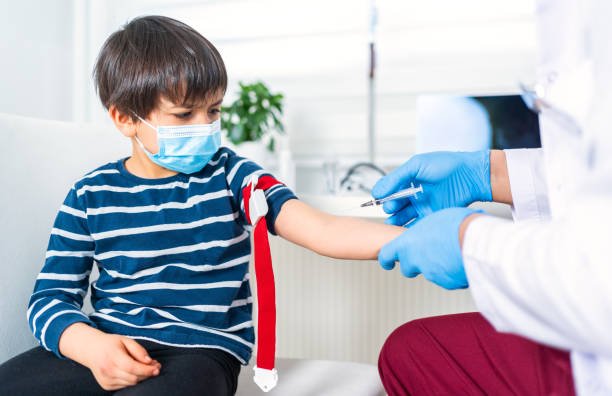
Testing should be done before symptoms occur. The American Academy of Pediatrics (AAP) recommends that you have your child screened for hemoglobin at 12 months.
For High-Risk Children: You should ask your doctor for a ferritin test if your child has specific risk factors. These risks include prematurity, low birth weight, high consumption of cow’s milk, vegetarian diet, fussy eating, physical symptoms of iron deficiency, and chronic illness.
Teenage Girls: You should schedule an annual hemoglobin screening for adolescent girls to actively monitor for iron loss due to menstruation.
These are regular children’s check-ups, which means that these blood tests are normally covered by your health insurance plan.
The Best Foods for Iron Deficiency in Kids
Two different forms of iron should be given in a child’s diet in order to effectively increase the iron level. Heme iron is found in animal food sources and is readily absorbed. Non-heme iron is found in plant foods and is less well absorbed, so always try to combine it with Vitamin C to increase absorption.
The following are some of the best Heme Iron Sources
- Lean ground beef
- Chicken thighs
- Turkey
- Eggs
- Salmon and tuna
The following are some of the best Non-Heme Iron Sources
- Lentils
- Black beans
- Kdney beans
- Spinach
- Kale
- Fortified Whole Grain Cereals
- Pumpkin seeds
- Tofu
- Raisins
- Apricots
Bottom Line
Iron deficiency in kids is not just a matter of diet. It impacts brain function, immune system, behavior, energy, learning, and long-term outcomes, and this impact is increasingly supported by research.
If the blood work confirms a deficiency, the primary care provider will prescribe a medical-grade, liquid iron supplement. You should take this supplement on an empty stomach or with a small amount of orange juice, as it absorbs best on an empty stomach.
Your provider will then request a repeat blood test in 3 to 4 months to see if the iron stores have been refilled.
You need to ensure that iron-rich foods are eaten at each stage of your child’s life, and try to actively reduce cow’s milk consumption
At Kairos Integrative Care, Lola, one of our integrative primary care nurse practitioners, suggests the right screenings for your child based on their age and risk factors, and offers the best medical treatment and diet plans to naturally fix this deficiency.
Book your consolation today!