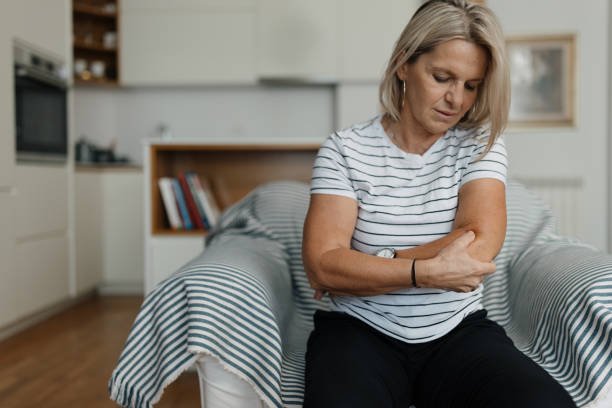
What causes your knees to hurt in the morning? If you are a woman in your forties, you are definitely asking this question. One of the most common health complaints in midlife is joint issues.
In fact, women are much more prone to suffer from joint pain than men, particularly after age 40. Research suggests that women are approximately 3 times more likely to develop rheumatoid arthritis and are more likely to develop osteoarthritis than men, and at an earlier age.
By the time you turn 40, your body has experienced a huge surge of hormonal and bodily changes, which have a direct impact on your joints. Joint pain in women over 40 is typically a combination of hormones, inflammation and underlying health conditions that require deep evaluation.
Why Your Joints Lose Cushion?
Estrogen does much more than just act as a reproductive hormone. Estrogen receptors are present in all musculoskeletal tissues and organs, including cartilage, bone, tendons, ligaments, and synovial tissue that is the lining of the joints. It works to keep your entire skeletal system in good shape.
Estrogen can have anti-inflammatory properties as well. As estrogen levels fall during menopause, the body has more inflammation and can start to cause joint and muscle pain.
As you enter perimenopause (around your late 30s or early 40s), the amount of estrogen in your body starts to change and decline. Your body no longer has this natural lubrication in your joints.
The cartilage which cushions the bones begins to wear down. Without this hormonal protection, daily activities can feel abrasive and result in morning stiffness and aching.
The Inflammation & joint pain
Inflammation is yet another huge factor. Inflammation is a healthy response of your immune system after an injury, when it is chronic, it is like a silent fire eating away at your joint tissues.
Stress, poor sleep, and changes in diet are inflammatory fires that often ignite as joint pain in women over 40. In the 40s, your metabolism slows down, and your body will not tolerate sugary foods, refined carbs, or alcohol. Such foods can cause a surge in blood sugar levels, leading to an influx of inflammatory chemicals into your body that can directly affect your joints.
As a result of years of stress, your gut health starts to become compromised, and your immune system becomes confused and begins to attack your own joint tissue.
Is It Arthritis or Another Disease?
A woman over 40 is likely to assume she is suffering from arthritis when she has joint pain. Arthritis is a term that means “joint inflammation,” but there are different types of arthritis and other diseases that can resemble arthritis.
Here is what could be going on:
1. Osteoarthritis
Osteoarthritis (OA) is the most prevalent type of arthritis and the most common cause of arthritis-related pain in women over 40. It’s a progressive disease in which the cartilage that covers the ends of bones slowly deteriorates over time. This causes friction between the bones, pain, swelling, and loss of range of motion.
The common sites of affected joints in women are the hips, knees, hands, and spine.
Osteoarthritis may result in bone growth in the hands, such as Heberden’s nodes in the fingertips and Bouchard’s nodes at the middle joints.
This pain is typically deep and dull, and increases with activity but improves with movement and heat therapy.
OA is not reversible; once cartilage is lost, it does not regenerate. However, it is very manageable, and its course can be slowed down significantly with weight control, specific exercise, and treatment.
2. Rheumatoid Arthritis
Rheumatoid Arthritis (RA) happens when your immune system mistakenly attacks the lining of your joints. Unlike osteoarthritis, RA pain is usually accompanied by severe swelling, redness, and warmth in the joints. It also tends to affect both sides of the body, for example, both wrists or both knees. RA is two or three times more common in women than in men, and it typically occurs between the ages of 30 and 60.
Unlike OA, RA is systemic and may involve organs such as the lungs, heart and eyes. That’s why early diagnosis and treatment are essential. Early treatment with modern disease-modifying antirheumatic drugs (DMARDs), such as biologic drugs, hydroxychloroquine, and methotrexate, can lead to near-remission or remission for many patients.
If you are suffering from small joint pain that is symmetrical and you also have a lot of stiffness and fatigue in the morning, this should be investigated by a provider who can order the right blood testing, like rheumatoid factor, anti-CCP antibodies, and inflammatory markers.
3. Hypothyroidism
Your thyroid controls your metabolism. Thyroid function may decrease in women as they get older. Sluggish thyroid activity can result in multiple symptoms, including joint and muscle pain, weight gain, hair loss, and fatigue.
It can be ruled out by a simple blood test for TSH. If the pain in the joints has been investigated and no clear musculoskeletal cause is identified, then thyroid function tests should be checked if not recently done.
4. Fibromyalgia
Fibromyalgia is not a type of arthritis. In fibromyalgia, there’s no inflammation or damage to the joints. It’s a central pain processing disorder where the nervous system overreacts to pain. This results in diffuse musculoskeletal pain that may be perceived as being joint-like without any joint disease.
This condition leads to painful generalized musculoskeletal complaints, fatigue, sleep disturbances, and brain fog. It’s far more prevalent in women and is commonly triggered by a physical trauma, stress, or hormonal changes at midlife.
5. Gout
Gout occurs when uric acid crystals deposit in the joints, causing sudden attacks of pain, heat, redness, and swelling that typically affect the big toe, ankle, or knee.
Although gout has long been thought to be a disease of men, in women, it becomes more common after menopause when the uricosuric effect of estrogen is lost.
Once gout is diagnosed, it is one of the most treatable joint conditions and is treatable with both short-term gout medications (colchicine, NSAIDs, and corticosteroids) and long-term urate-lowering therapy.
Key Steps to Protect Your Joints Today
The best treatment for joint pain in women over 40 years is to treat the cause of the pain, not simply cover it up with an Ibuprofen or other painkiller.
1. Eat to Lower Inflammation
It’s a matter of extinguishing the inner flames. Eliminate pro-inflammatory foods, such as refined sugar, white flour, and processed seed oils. Swap them out for anti-inflammatory whole foods, such as wild-caught fish (Omega-3s) and leafy greens, berries, healthy fats such as olive oil and avocado.
Women who suffer from gout should limit eating excessive amounts of red meat, avoid drinking alcohol (especially beer), and foods that are rich in purine, such as shellfish and organ meats. These will lessen uric acid production and frequency of flares.
2. Movement
Many women cease to exercise because their joints hurt, but this just makes it worse. Cartilage does not have its own blood supply; it gets its nutrients from the fluid inside the joint. During movement, the joint is squeezed, which pushes nutrients into cartilage. Start doing low-impact, muscle-building exercises. Do some lightweight lifting or resistance-band exercises.
Low-impact exercise is one of the most effective treatments for osteoarthritis. Swimming, cycling, walking, elliptical, and yoga do not put stress on joints like running or jumping.
3. Support Your Hormones Naturally
Because one of the big triggers is the loss of estrogen, it is important to help your body’s other hormones. You should focus on getting enough healthy fats, as cholesterol is the building block your body uses to make hormones. Consume more cruciferous vegetables such as broccoli, cauliflower, and Brussels sprouts. These assist in the metabolism and regulation of excess estrogen in your liver.
4. Hydrate and Rebuild
Most of your synovial fluid (joint fluid) consists of water. When you’re dehydrated, your joints dry out. Drink at least half your body weight in ounces of water each day. Another option is to add a good, strain-free collagen powder to your morning coffee or smoothie. This supplies your body with all the necessary amino acids to repair damaged connective tissue.
5. Vitamin D and Omega-3 Supplementation
Deficiency of vitamin D is a very common situation in women over 40 years of age. This is linked to increased pain sensitivity, more autoimmune diseases, and faster bone loss. Your 25-OH vitamin D level should be tested and brought up to at least 40-60 ng/mL for the health of your joints and immune system.
Fish oil supplements and fatty fish provide omega-3 fatty acids (EPA and DHA) that have relevant anti-inflammatory actions, with particular support in the context of RA. In the clinic, 2-3 grams of combined EPA/DHA is used every day for inflammatory joint diseases.
Further, there is increasing evidence to support Turmeric/curcumin supplementation for OA specifically. There have been several randomized controlled trials that demonstrate that curcumin is as effective as ibuprofen in the treatment of knee OA. This has fewer gastrointestinal side effects. You should look for a formulation with piperine (black pepper extract) for adequate absorption.
Conclusion
Joint pain in women over 40 could be due to a loss of estrogen, increased cartilage destruction, an autoimmune disorder, or a metabolic disease such as gout.
If the pain is mild, occasional, and definitely due to a particular activity, then it can be managed well by rest, ice, anti-inflammatory strategies, and slow reintroduction of activity.
But if you have pain or stiffness in your joints that lasts for more than six weeks and you don’t know the cause, you should seek evaluation.
At Kairos Integrative Care in Houston, Texas, Lola, one of our integrative nurse practitioners, provides evidence-based chronic disease management, screenings, and personalized treatment plans to help patients improve long-term health outcomes.
Don’t wait for the pain to become more severe. Schedule an appointment with us today to discover the source of joint pain and get your active life back.