
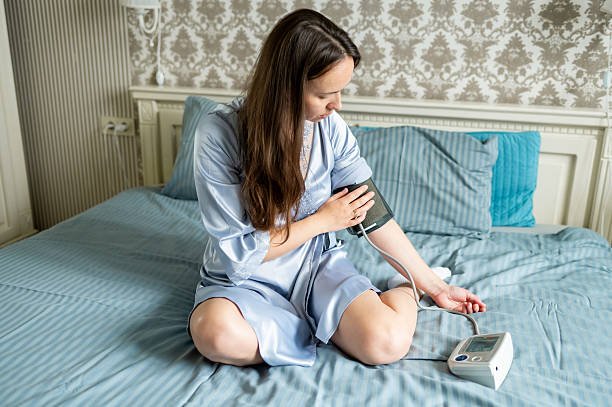
Blood pressure is one of the most important measures of your overall health. However, people generally misunderstand it a lot.
In simple terms, blood pressure refers to the force of blood pushing against your artery walls as your heart pumps. It’s measured using two numbers. Systolic is the top number, which is the pressure when your heart beats. And Diastolic is the bottom number, which is the pressure when your heart rests. Your Bp is considered normal when it is less than 120/80.
Blood pressure doesn’t remain the same all the time. It goes up and down naturally during the day. But some people see that their blood pressure is regularly higher in the morning.
This leads to a common concern: why is my blood pressure high in the morning?
Actually, it is a very valid question since high morning blood pressure readings are not mere coincidences. It often indicates that your underlying patterns, like sleep or metabolic pattern are disrupted.
Hidden Causes of High Blood Pressure in the Morning
Your blood pressure naturally goes up in the early morning hours. This is referred to as the morning blood pressure surge. It starts in the early morning hours, even before you wake up completely.
At that time, your body secretes hormones such as cortisol and adrenaline, and your nervous system gets more active. And your heart starts pumping more forcefully, and your blood vessels tighten slightly.
It’s actually your body, getting you ready to wake up and start the day. But if the surge is exaggerated, it may indicate that there are other imbalances. Studies have shown that an abnormal morning blood pressure rise is significant because it can lead to a higher risk of heart attacks and strokes in the morning.
Following are some of the causes of High BP in the morning:
1. Poor Sleep or Sleep Disorders
Your sleep quality plays a huge role in blood pressure regulation. During sleep, blood pressure normally decreases by 10- 20%, which lets your heart and arteries take a break. However, if you are not sleeping well, your blood pressure does not drop at night but remains high.
Besides poor sleep, some of the hidden conditions, such as sleep apnea, can be very important here. One of the studies stated that conditions like obstructive sleep apnea are the strongest factor associated with morning hypertension.
Untreated OSA is highly associated with causing non-dipping BP patterns, high morning BP, and resistant hypertension. So, when you get to the root and treat the underlying OSA, your morning BP usually gets significantly better.
If you are waking up exhausted and your blood pressure readings are consistently high, that’s your clue that you may be suffering from sleep apnea.
2. Some Medications or Missed Doses
Medications are one of the most ignored yet science-backed explanations of the morning high blood pressure situation.
- If you take medications too early, this may wear off by morning. Also, many blood pressure medications don’t provide full 24-hour coverage. Because of this, your drug levels go down around early morning, 4-8 AM, and you may see high readings. The studies also indicate that patients with uncontrolled morning BP frequently use drugs with limited overnight coverage.
- Besides this, the time you take blood pressure medications matters a lot. Your BP rises most in the early morning. So medication needs to be active during that window. If you take your medicines in the morning, the maximum effect will probably be during the day. But its effect will be minimal overnight. So, it is crucial to take your medicine at the right time.
- On top of that, forgetting to take medicine even for one time can cause a rebound effect. If a single dose is missed, the blood pressure may be out of control for a few hours, and that can be reflected in the morning blood pressure readings.
Your healthcare professional is going to figure out what is causing your rise in blood pressure in the morning, and may suggest to you long-acting or sustained-release medications that provide more stable 24-hour blood pressure control.
3. High Salt Intake the Night Before</h2
The types of food you consume in the evening can directly affect your levels the next morning. For instance, if you have:
- Salty dinners
- Fast food
- Canned soups and sauces
- Processed meats such as bacon, sausages, or deli meats
- Late-night snacking
Such foods can make your body store water overnight and thus raise your blood pressure in the morning. A study showed that the participants who ate a high-salt dinner had elevated systolic BP in the morning, even though their daytime readings were normal.
In case you have apnea, high salt intake the night before can also worsen sleep apnea by increasing fluid around your neck and by elevating arterial stiffness in the morning.
So be careful about what you eat in the evening and try to maintain a balanced diet.
4. Underlying Health Conditions
Sometimes, your morning hypertension has secondary causes that lie deeper inside your body, which include:
- Hormonal imbalances like adrenal dysfunction
- Kidney issues
- Insulin resistance
- Metabolic conditions
- Thyroid disorders
Research has confirmed that many hidden diseases can interfere with the usual blood pressure regulation and make morning readings high.
Therefore, if your morning hypertension continues to be a problem even after you have made the necessary changes in your lifestyle and taken the prescribed medicine, our healthcare providers in Texas investigate these underlying conditions.
5. Stress
Stress has also been listed as one of the causes of high blood pressure in the morning. Yes, in the morning, your mind is relaxed and not actively thinking about stress when you wake up. But chronic stress elevates sympathetic activity even during sleep.
In other words, the amount of BP that is naturally low at night is not as low as it should be when one is experiencing stress continuously.
Long-term stress keeps your nervous system in a state of alarm, leading to high cortisol levels and, consequently, high blood pressure readings in the morning.
It is quite common among very busy workers, caregivers, and people who are handling multiple responsibilities.
How to Lower Morning Blood Pressure Naturally
You can follow some practical ways to take care of your morning blood pressure readings.
- Work on improving your sleep quality through regular sleep schedules and a soothing bedtime routine.
- Try to avoid heavy or salty meals at night
- Add more fruits, vegetables, whole grains, and foods high in potassium and magnesium to your diet
- Use herbs/spices instead of salt
- Limit alcohol consumption.
- Try breathing exercises, journaling, or gentle stretching before bed to lower your stress
- To ease your stress before bed, you can try doing breathing exercises, writing in a journal, or gentle stretching
- Treat sleep disorders like Sleep Apnea
- Keep yourself hydrated during the day to avoid getting dehydrated overnight
- Take your medication as prescribed and never change the schedule on your own
- Try to limit caffeine late in the day, as it can interfere with sleep and the next day’s blood pressure
- Measure your blood pressure after sitting quietly for a few minutes, not immediately after waking
- Discuss with your doctor if taking medicine at night can help to reduce morning spikes
- Keep your weight in check, even a small reduction in body weight lowers BP, and the morning surge
When to Seek Medical Advice
Your slight increase in BP in the morning is typical. However, if you notice elevated readings over time, it may be a sign of health problems.
You should consult with a healthcare professional if:
- Your morning measurements are always high and above 130/80.
- Your readings during the day are normal but higher in the morning, which is masked hypertension
- You suffer symptoms such as headaches, dizziness, or chest pain
- Your measurements fluctuate significantly during the day
- You have diabetes or kidney disease as a risk factor
A nighttime rise of more than 20-30 mmHg in your BP relative to your average level can raise your risk of stroke. This is because the morning surge is seen as an independent risk factor, even if the overall BP is apparently under control.
Frequently Asked Questions
Is it normal for blood pressure to be highest in the morning?
Yes, a mild increase is normal. However, consistently high readings may need evaluation.
What time should I check my blood pressure?
Check it within an hour of waking, but after sitting calmly for a few minutes.
Can anxiety cause high morning blood pressure?
Absolutely. Stress hormones can elevate your readings, even if you don’t feel anxious right away.
Should I take my medication at night instead?
Sometimes this helps, but only under medical guidance. Your timing should be personalized.
Can dehydration affect morning readings?
Yes. Mild dehydration can make blood pressure appear higher.
Conclusion
If you have been asking yourself, “Why is my blood pressure high in the morning? ” it could be a sign of something important. Usually, a single high reading in the morning is considered normal because blood pressure naturally changes.
On the other hand, if you are always waking up to higher readings, then there may be several factors involved, such as stress, poor sleep, incorrect timing of medication, or other health problems that need to be addressed.
Little things such as getting better sleep, cutting down on salt in the evening, keeping stress in check, being physically active, and taking medicines properly can turn the situation around significantly.
If you are confused about morning high blood pressure, Lola, one of our integrative healthcare providers at Texas, is here to assist you in determining the reasons for your high blood pressure in the morning.
We accept major insurance plans, including Blue Cross, Aetna, Ambetter, Cigna, and more. New patients are always welcome, and if visiting the clinic isn’t possible, telemedicine appointments are available across the entire state of Texas.
Book your appointment today!