
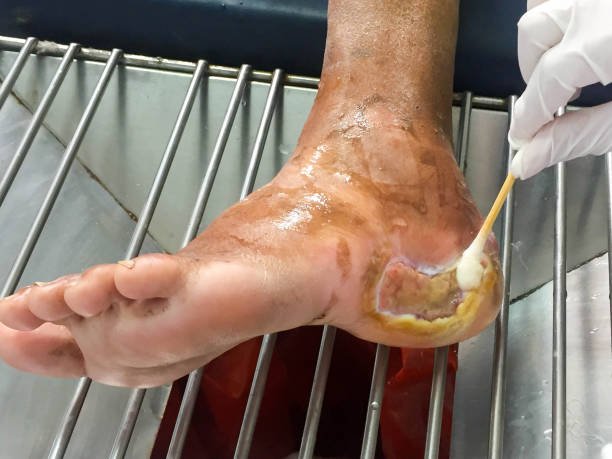
If you have diabetes, you must have heard about diabetic foot ulcers. These are the open sores or wounds that often form on the feet of people living with diabetes.
In Texas, where diabetes rates are among the highest in the country, foot problems are a serious concern. According to the Texas Department of State Health Services, thousands of Texans are hospitalized each year because of diabetic foot complications.
However, with early treatment and proper foot care, it is now possible to prevent serious complications like infections and amputations. In this guide, we’ll explain everything you need to know about prevention, early detection, and diabetic foot treatment.
What is a Diabetic Foot Ulcer?
A diabetic foot ulcer is an open sore that often forms on the bottom of the foot or around the toes. If you have diabetes, you may also have nerve damage (neuropathy). This nerve damage can make it harder to feel pain or anything.
On top of that, poor blood flow in the feet can slow healing. So, even a tiny cut or blister can turn into a bigger wound over time.

Causes and Risk Factors
Diabetic foot ulcers don’t happen overnight. They often start with small injuries or skin changes that are often ignored by many people. Following are the common causes of diabetic ulcers:
1. Nerve Damage (Neuropathy)
When diabetes occurs, it often damages your nerves. You may not feel any pain, heat, or even any injury. This means you have a chance to get a wound without realizing it.
2. Poor Blood Flow
When blood can’t flow easily to your feet, cuts and sores take much longer to heal. Also, if you have peripheral artery disease, blood does not reach your feet as it should. This can also slow down healing and increase the risk of infection.
3. Foot Shape or Shoe Problems
Bunions, hammertoes, or shoes that don’t fit you well can create pressure points that rub and cause sores.
4. High Blood Sugar
When your blood sugar stays high always, your body struggles to fight infections and heal wounds.
5. Smoking
If you smoke, your blood doesn’t flow to your feet. That means ulcers take much longer to heal. It is one more reason to think about quitting.
Common Symptoms of Diabetic Foot Ulcers
You may not feel any pain with diabetic ulcers. You should look for below warning signs:
- You see redness or swelling around the sore
- Wet spots or drainage in your socks or shoes
- Dark or black skin, which means you have poor blood flow
- You may feel numbness or tingling in your feet
- Bad smell or pus, which could mean infection
Even if the ulcer is small and painless, it still needs proper medical attention. At Kairos Integrative Care, we help people across Texas to get the right care for diabetic foot problems.

Why Early Diagnosis is Necessary?
A tiny cut or blister on your foot can become a serious infection in just a few days if it is not treated. That’s why at Kairos, we always emphasize the importance of catching problems early.
Early diagnosis and treatment can lower your risk of infection, speed up wound healing, and lower the chance of amputation. If you see any change in your feet, see a healthcare provider right away.
Diabetic Foot Ulcer Treatment at Kairos Integrative Care
When you come to us with a diabetic foot ulcer, we treat diabetic foot ulcers with a complete plan that helps the wound heal properly. Depending on your needs, treatment may include:
1. Wound Care
Regular cleaning of the wound helps keep the ulcer protected from dirt and bacteria. We clean and dress the wound regularly to promote quick healing. This also lowers the risk of any further infections.
2. Blood Sugar Control
It is very important to keep your blood sugar in balance. Steady blood sugar helps your body heal faster and lowers the risk of new ulcers.
3. Infection Control
If an infection is present, we use the right antibiotics to stop it from spreading. Getting treatment early can stop the infection and protect your foot from further damage.

4. Offloading Pressure
To help the wound heal faster, we may use special shoes, boots, or casts that take pressure off the sore. This helps the area to recover without being irritated every time you walk.
5. Surgical Intervention
In severe cases, we may remove dead tissue or improve blood flow through surgery.
6. Amputation Prevention
Early treatment helps us to stop small wounds from turning into serious problems like Amputation. We may go for advanced treatments such as negative pressure wound therapy, skin grafts, or hyperbaric oxygen therapy in severe cases.
Finding Diabetic Foot Care in Texas
When you are searching for diabetic foot care near me, look for clinics that specialize in proper wound care and diabetes management.
At Kairos Integrative Care in Texas, our team provides complete diabetic foot care, including advanced wound treatments, education, and prevention strategies. We work closely with you to heal your ulcer properly.

How to Care for Your Feet with Diabetes?
The best way to avoid a foot ulcer is to take care of your feet every single day. You should adopt the following habits:
- It is best to wash your feet every day with warm (not hot) water and gentle soap.
- Dry them well, especially between the toes.
- Apply moisturizer to keep your skin soft, but skip the areas between your toes to prevent fungal infections.
- You should check your feet daily for cuts, blisters, redness, or swelling.
- Wear comfortable, well-fitting shoes and socks to avoid pressure points.
- Make sure your blood sugar is in the normal range.
- Clean the skin around any sore.
- Change dressings often to keep your wounds dry.
Conclusion
A diabetic foot ulcer can heal with the right care. But waiting too long can turn a small problem into something serious.
If you live in Texas and notice any changes in your feet, don’t wait. At Kairos Integrative Care, Lola, one of our board-certified practitioners, offers expert and compassionate diabetic foot care near you.
We see patients in Houston, Sugar Land, Richmond, and nearby areas (77046 & 77478). We accept most major insurance plans like Blue Cross, Aetna, Ambetter, Cigna, and more.
We’re accepting new patients now. If you can’t come in person, we also offer telemedicine visits to patients across the entire state of Texas.
Book your appointment today!