

Heart diseases have become one of the greatest health issues in the United States, but most individuals are not aware of the risks. It can be developed silently and gradually with no visible symptoms until a serious occurrence, such as a heart attack, occurs.
Cholesterol plays a major role in the development of heart disease, which is why it is crucial for heart health.
Two terms that are used frequently when talking about cholesterol are LDL and ApoB. While LDL cholesterol is widely known and routinely tested, ApoB is less familiar but may offer deeper insight into heart disease risk.
In this article, we’ll explain the difference between ApoB and LDL, how they affect heart health, and why understanding both can help you make more informed decisions about your cardiovascular care.
What LDL Cholesterol Actually Measures
LDL cholesterol tells you how much cholesterol is being carried inside LDL particles in your blood. What it does not tell you is how many LDL particles you actually have.
That difference matters more than most people realize. Two people can have the same LDL cholesterol number, but very different risks. One person may have fewer, larger LDL particles, while another may have many small, dense LDL particles.
Even though the lab result looks the same, the second pattern is far more likely to damage blood vessels and raise heart disease risk. LDL cholesterol became the standard test because it was easy to measure and worked reasonably well when looking at large groups of people.
What ApoB Measures and Why It Matters More
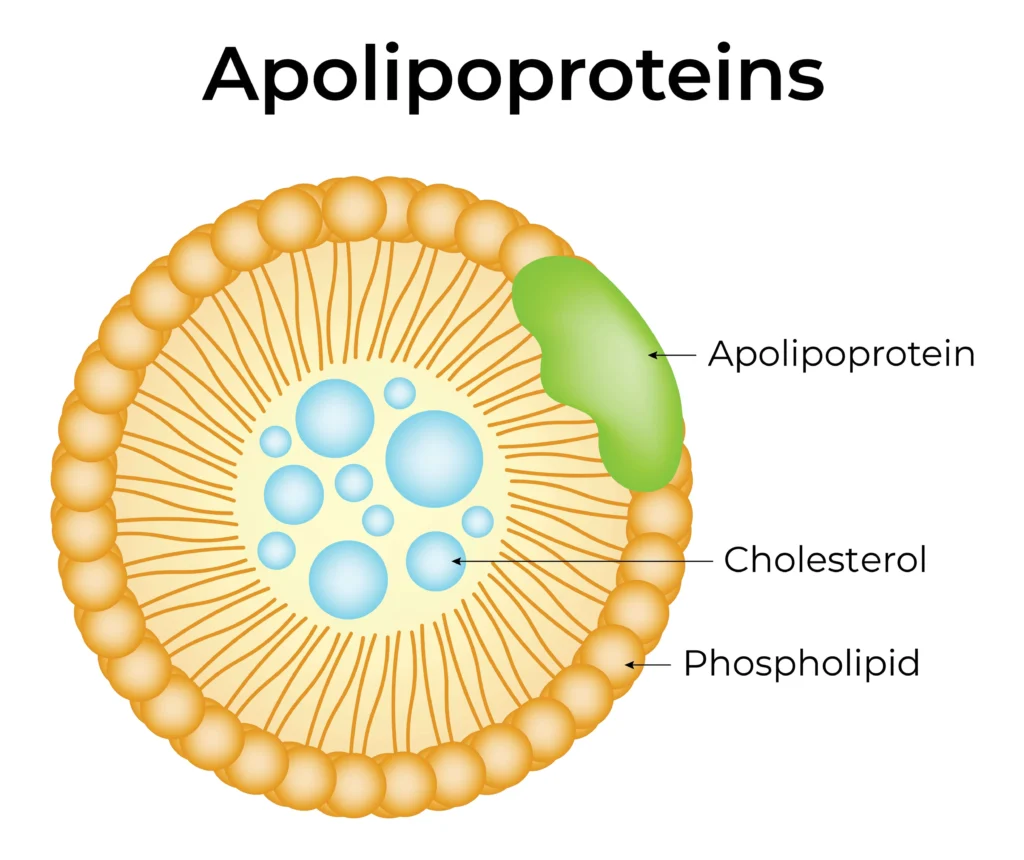
ApoB, short for apolipoprotein B, is a protein found on every cholesterol-carrying particle that can damage your arteries, including LDL and VLDL.
It is not only counted by the number of particles containing a single ApoB molecule, but since every particle in your blood has only one ApoB molecule, it is basically a measure of how many cholesterol-carrying particles you have.
You can have an LDL level that looks normal on paper, yet still have a high number of cholesterol particles.
Studies consistently show that ApoB is a more accurate predictor of heart disease risk than LDL cholesterol alone, especially in people with insulin resistance, diabetes, obesity, or metabolic syndrome. In these cases, ApoB helps uncover risk that standard cholesterol tests may miss.
ApoB vs LDL: Where Traditional Testing Breaks Down
Many individuals in Houston and across the U.S. get routine cholesterol tests and feel relieved when their LDL comes back normal.
While that can be reassuring, research shows that in about 20 to 30 percent of people, LDL cholesterol and ApoB do not match. LDL may look fine, but ApoB is elevated, which means cardiovascular risk is higher than it appears.
This discrepancy is more common than most people realize. For example:
- Patients with diabetes or insulin resistance often have smaller, more dense LDL particles. These particles have a harmful effect on the arteries even if the LDL concentration is normal.
- Lifestyle factors, such as food, stress, quality of sleep, and physical activity, can raise the number of cholesterol particles without significantly affecting the LDL figure.
Most of the time, LDL and ApoB rise and fall together, but not always. When they don’t align, this is called discordance. It is especially common in people with insulin resistance, type 2 diabetes, high triglycerides, central weight gain, or conditions like polycystic ovary syndrome.
Large studies have also shown that when LDL and ApoB disagree, ApoB is the stronger and more reliable predictor of cardiovascular risk.
ApoB Vs LDL – What Each Test Reveals
When it comes to cholesterol testing, LDL and ApoB answer different questions, and knowing the difference can help you better understand your heart health.
LDL cholesterol measures the amount of cholesterol that is carried in the blood.. It is:
- Widely available
- Covered by insurance
- Useful for population screening
- Less accurate in metabolic disease
ApoB, on the other hand, measures the amount of cholesterol-carrying particles that are actually in your blood. It:
- Measures particle number
- Better reflects arterial exposure to lipoproteins
- Stronger predictor of heart attack and stroke
- Especially valuable in metabolic and inflammatory states
Because of this, our healthcare providers now consider LDL to be an indirect indicator, while ApoB is considered to be the true biological driver behind the plaque buildup and cardiovascular disease.
When ApoB Testing Should Be Considered
ApoB testing is not meant to replace LDL in every patient. But it will be particularly useful in patients where the traditional testing leaves unanswered questions.
Advanced cholesterol testing, including ApoB, should be considered when:
- LDL cholesterol is normal, but cardiovascular risk appears to be high
- There is a strong family history of heart disease
- High Triglycerides
- Metabolic syndrome or diabetes is present
- Patients don’t respond as they are supposed to to statin therapy
As a result, more and more patients are looking for advanced cholesterol testing and ApoB testing near me, especially in metropolitan areas such as Houston.
What is a Normal ApoB Levels?
The ideal level can be determined with respect to the risk profile of an individual, but the general levels include:
- Optimal: < 90 mg/dL
- Borderline: 90 – 119 mg/dL
- High risk: ≥ 120 mg/dL
- Very high-risk: 130–160+ mg/dL
Higher ApoB level means more atherogenic particles, which increases cardiovascular risk even if your LDL cholesterol looks normal.
Bottom Line
LDL cholesterol has played an important role in cardiovascular prevention, but it is no longer sufficient on its own. ApoB testing shows why some people can get heart disease despite having a normal LDL level.
At Kairos Integrative Care, ApoB testing is included in a full cardiometabolic assessment, and most insurance plans cover it when there’s a documented medical need.
Lola, one of our integrative nurse practitioners, works closely with patients to interpret ApoB and LDL results, develop a personalized plan, and implement lifestyle and medical strategies in order to reduce your long-term cardiovascular risk.
If you want to understand your heart health beyond standard cholesterol numbers, schedule an appointment with us today!